DVDs and Books For Kids

Thursday, January 6, 2011

What Does Atlantis - The Lost Empire Explained Teach Kids About Biblical lessons on Truth, Stewarship and Discernment

Disclosure: This post contains Amazon affiliate links. If you choose to watch or purchase through these links, I may earn a small commission at no extra cost to you. 


Milo Thatch and the Biblical Seeker Archetype in Atlantis: The Lost Empire

Milo Thatch, the protagonist of Atlantis: The Lost Empire, embodies the seeker archetype. From childhood, he was shaped by his grandfather’s stories about Atlantis, which functioned almost like a passed-down testimony. These stories plant in him a sense of calling rather than mere curiosity. 

This calling reflects a Biblical principle: "it's the glory of God to conceal a matter; to search a matter is the glory of kings" (Proverbs 25:2). Milo’s obsession is not driven by wealth or glory but by the desire to recover lost knowledge and preserve a forgotten civilisation. In biblical terms, he resembles the figure of the faithful steward—one who seeks to restore rather than exploit. (Luke 16:10) Whoever can be trusted with very little can also be trusted with much..."

Rejection of Truth: A Biblical Pattern

Milo’s struggle to obtain funding mirrors the experience of many biblical prophets and visionaries who were ridiculed by authorities. Like Noah, who warned of a flood yet was mocked by his contemporaries (Genesis 6-7), or Jeremiah, whose message was dismissed by leaders (Jeremiah 20:7-8). Milo is rejected by the mayor and town councillors. Institutional power proves blind to truth when it does not serve immediate interests. Truth, in Scripture as in the film, is often recognised only by those willing to listen in humility.

Corrupt Intentions and the Love of Money

When Milo finally finds support, it comes from an unlikely and morally ambiguous group led by Captain Venture. This reflects a recurring biblical pattern: God’s purposes often advance through imperfect vessels. Yet unlike biblical narratives, in which God directs events toward redemption, the expedition crew hides a corrupt intention. 

Captain Venture embodies fallen humanity—ambitious, calculating, and governed by greed. His obsession with the crystal parallels the biblical warning that “the love of money is the root of all kinds of evil” (1 Timothy 6:10). Venture does not see Atlantis as a living culture but as a resource to be mined.

This attitude mirrors humanity’s condition after the fall: Cursed is the soil because of you... Through painful toil, you will eat food from it." (Genesis 3-17). Dominion becomes exploitation when separated from Dod's design for stewardship.

Atlantis as a Symbol of the Lost Eden

Atlantis itself symbolises a lost Eden. It is a civilisation preserved beneath the waters, hidden from a corrupted world above. Water in Scripture is both judgment and mercy—Noah’s flood destroys wickedness but preserves life through the ark. 

Likewise, Atlantis survives beneath the sea, protected yet isolated. Milo approaches Atlantis with reverence, much like Moses approaching holy ground, while Venture approaches it as a commodity. The difference lies not in intelligence or courage, but in the condition of the heart.

Kida and Covenant Memory

Kida (Kita) represents inherited wisdom and covenant memory. She is the living link between the past and the present, much as Israel’s role is in preserving divine revelation. Her trust in Milo is not accidental; it is grounded in shared values—truth, preservation, and life. Together, they seek the ancient power not to possess it, but to restore balance. This reflects a biblical understanding of power as something entrusted, not owned. "What do you have that you have not received?" (1 Corinthians 4:7)

The Crystal: Power, Responsibility and the Fall

The crystal itself carries strong symbolic weight. It grants life but demands sacrifice and responsibility. In this sense, it mirrors divine gifts in Scripture—blessings that become destructive when taken without obedience. When Venture seeks the crystal by force, he reenacts the sin of Adam and Eve: grasping what was never meant to be taken on human terms. The result is death and destruction, reinforcing the biblical truth that life cannot be preserved through greed.

Human Nature and Moral Corruption

Ultimately, Atlantis: The Lost Empire is less about adventure and more about anthropology. It exposes human fallenness: the ease with which people betray, exploit, and destroy in pursuit of wealth. Milo’s innocence is not ignorance but faith—faith in knowledge, in heritage, and in moral purpose. Yet his failure to discern the intentions of those funding him also reflects a biblical warning: "The simple believe anything, but the prudent give thought to their steps" (Proverbs 14:15). Good intentions without discernment can lead to vulnerability.

The film quietly affirms a biblical worldview: civilisation does not collapse due to lack of technology, but due to moral corruption. Atlantis did not fall because it lacked power; it fell because power was misused. 

This echoes Scripture: "Righteousness exalts a nation, but sin condemns any people." (Proverbs 14:34)

In this way, the film echoes the biblical narrative of humanity itself—created for stewardship, fallen through greed, yet always offered the possibility of restoration through humility and right intention.

Please watch the trailer.


Wednesday, January 5, 2011

What Does The Karate Kid Teache Kids About mastering the Basics, Discipline and Life

What Kids Can Learn from The Karate Kids About Discipline and Mastering the Basics

πŸ™…In The Karate Kid, Dre Parker (played by Jaden Smith) moves from West Detroit to Beijing with his mother, Sherry, hoping for a better future. What begins as a fresh start soon becomes a difficult journey for Dre. Surrounded by an unfamiliar culture, language, and environment, he struggles to fit in and feels like an outsider. 

His situation worsens when Cheng, a skilled Kung Fu student trained under a harsh master, targets him for bullying. feeling powerless and discouraged, Dre reaches a breaking point. Like many children facing adversity, he considers giving up and returning to what is familiar. 

This reflects a common human response to difficulty. Yet Scripture encourages perseverance: 

"Consider it pure joy...whenever you face trials of many kinds, because you know that the testing of your faith produces perseverance." (James 1:2-3)

Discipline Over Shortcut

πŸ˜‰Dre's life changes when he meets Mr Han (played by Jackie Chan), who unexpectedly becomes his teacher. Instead of teaching impressive kung fu moves right away, Mr Han instructs Dre to perform simple, repetitive tasks - taking off his jacket, hanging it up, dropping it, and repeating the process over and over. 

πŸ™At first, Dre is frustrated. The training feels meaningless and even humiliating. He wants a quick result and visible progress. But over time, he begins to understand that these basic movements are building something deeper-discipline, muscle memory, and focus. 

This mirrors a powerful biblical principle: "Desire without knowledge is not good, and whoever makes haste with his feet misses his way." (Proverbs 9:12)

Success is not achieved in haste, but through small, consistent steps that often seem insignificant. 

The Power of Patience and Repetition

One of the central lessons of The Karate Kid is that true growth is slow and intentional. Dre learns that repetition is not a waste of time - it is the foundation of excellence. 

In a world that often promotes instant success, this message is countercultural. The Bible reinforces this idea: "Let us not become weary of doing good, for at the proper time we will reap a harvest if we do not give up." (Galatians 6:9)

Dre's transformation does not happen overnight. It is the result of consistent effort, humility, and trust in the process. 

Strength Redefined: Character Over Aggression

😠
Under Master Li, Cheng is taught to show no mercy. His strength is rooted in aggression and dominance. In contrast, Mr Han teaches Dre that real strength comes from self-control, balance, and discipline. 

This reflects the biblical understanding of strength: "Better a patient person than a warrior, one with self-control than one who takes a city," (Proverbs 16:32)

Dre's journey shows that strength is not about overpowering others, but about mastering oneself. 

Perseverance Over Adversity

By the time Dre enters the tournament, he is not just physically prepared - he has grown mentally and emotionally. Even after being injured, he refuses to quit. He remembers the lesson: life will knock you down, but you must choose to get back up. 

This aligns with Scripture: "Though the righteous fall seven times, they rise again" (Proverbs 24:16)

Dre's victory is not just about winning the competition - it is about overcoming fear, doubt, and discouragement.

Mastering the Basics Before Mastering Life

The core message of The Karate Kid is simple but powerful: there are no shortcuts to growth. 

πŸ™ŽDre begins by wanting fast success. Instead, he learns that every meaningful achievement is built on small, consistent actions. The jacket exercise becomes a symbol of this truth: what seems insignificant at first becomes essential later. 

This principle applies to everyday life. Whether it is learning, personal growth, or faith, progress begins with discipline and consistency.

As Scripture reminds us: 
"The plan of the diligent leads to profit as surely as haste leads to poverty." (Proverbs 21:5) 

Final Reflection


The Karate Kid is more than a film about martial arts. It is a lesson of character, perseverance, and discipline. It teaches children - and adults - that growth requires patience, humility, and commitment. 

There are no shortcuts to maturity, strength or character. Master teh basics and everything else will follow. 

You can watch a trailer here:


Monday, December 20, 2010

What Does *Happily N'Ever After* Teach Kids About Illusion vs Reality (Part 1)

At first glance, *Happily N'ever After* appears to be a lighthearted animated film that playfully reimagines classic fairy-tale characters. However, beneath its surface, the movie explores a deeper theme: illusion versus reality.
This is not just a question for children’s entertainment. It’s a concept that resonates with all ages—what we believe versus what is actually true.


The world of illusion: when stories shape expectations

From a young age, children hear fairy tales where everything is neatly arranged. Good is rewarded, evil is punished, and every story ends with a perfect “happily ever after.”
This creates an expectation:
life should always end well if the story is right.
In *Happily N'ever After*, this expectation is turned upside down. The film suggests that stories can be manipulated, outcomes are uncertain, and what seems “destined” is not always guaranteed.
This is where illusion comes in.
Illusion is not always something evil. It is simply when:
  • We believe something is true because it looks true
  • We accept what we’re told without examining it
  • We assume outcomes will always follow a perfect pattern
In simple terms, illusion is a shaped expectation that may not match reality.
The Bible touches on this idea in a very direct way:
“Man looks on the outward appearance, but the Lord looks on the heart.”1 Samuel 16:7
Simply put, what appears on the surface is not always the full story.

The shift to reality: when things don’t follow the script

As the story unfolds in *Happily N'ever After*, the idea of a perfectly controlled fairy-tale ending falls apart. Characters face confusion, disruption, and unexpected results.
This reflects something very real in life:
reality does not always follow the script we expect.
Many people grow up with the idea that life will move in a straight line:
  • study
  • work
  • success
  • stability
  • happiness
But reality is messier. Things change, people make choices, and unexpected events disrupt our plans.
This contrast between expectation and experience is at the heart of the movie’s message.
The Bible also acknowledges this limitation in human understanding:
“Trust in the Lord with all your heart and lean not on your own understanding.” — Proverbs 3:5
In other words, our perception is limited, and what we think should happen is not always what actually happens.

Illusion vs reality in everyday life

The movie's theme is not just about fairy tales—it reflects everyday thinking.
Illusion can appear in many forms:
  • Believing success should come quickly
  • Assuming others have a perfect life
  • Thinking that effort always produces immediate results
  • Trusting appearances without deeper understanding
Reality, on the other hand, is slower and more complex:
  • Success often takes time
  • People struggle behind the scenes
  • Progress is not always visible
  • outcomes are influenced by many unseen factors
For children watching the film, even if they don’t fully articulate it, they are being introduced to an important lesson:
what looks simple and perfect on the outside is often far more complicated underneath.


 Why this matters for kids

Children are naturally drawn to stories, especially fairy tales. There is nothing wrong with that. Stories help them imagine, dream, and understand moral ideas.
However, films like Happily N'ever After introduce something slightly different: critical awareness.
It gently shows that:
  • Stories are constructed
  • Endings are not always predictable
  • And expectations can be misleading
This doesn’t take away imagination—it deepens understanding.
It helps children slowly learn that:
imagination is powerful, but it is not always reality.


A balanced biblical reflection

From a biblical perspective, the difference between illusion and reality is often connected to truth and discernment.
The Bible encourages people not just to accept things at face value, but to test and understand what is right:
“Test everything. Hold on to what is good.” 1 Thessalonians 5:21
This idea fits well with the film's message. It is not about rejecting stories or imagination, but about learning to see beyond surface-level appearances.

Final thought

*Happily N'ever After* may look like a simple animated twist on fairy tales, but it carries a theme worth reflecting on.
The contrast between illusion and reality reminds us that:
  • Not everything that looks certain is certain
  • Not every expected ending happens
  • And understanding life goes deeper than surface appearances
In simple terms, the film teaches that:
what we imagine and what is real are not always the same—and learning the difference is part of growing up.


Monday, July 5, 2010

What Does Kung Fu Panda Teaches Kids About Life Lessons, Passion, Determination, Self Belief and Human Character

Kung Fu Panda is more than a DreamWorks animation - it's a philosophy presented in a playful, accessible way for anyone willing to listen. Beneath the colourful animation and action lies a story rich in life lessons about passion, determination, self-belief, and human character. 

Po: A Dreamer Caught Between Expectation and Passion

We meet Po, a loveable, round panda, living among Chinese pots and noodles in his family's noodle shop. Though kind-hearted, Po Longs for more: he dreams of becoming the legendary Dragon Warrior. 

Alone, he imagines himself mastering martial arts, far from the mundane world of Noodles. His father, the duck, hopes Po will continue the family business, reflecting a tension many of us know-the tug-of-war between parental expectation and personal passion. 

This tension mirrors a Biblical truth: "Train a child in the way he should go, and when he is old he will not depart from it." Proverbs 22:6

While parents guide, the individual still must discover their own purpose. Yet Po's heart is set on his dream, and he patiently waits for the right opportunity. 

Opportunity, Courage and Divine Timing

That moment comes when a nearby fight tournament featuring the Furious Five takes place. Against all odds, Po finds a way in, demonstrating creativity and determination, even building a makeshift rocket chair to reach the courtyard. There, he meets master Oogway, who instantly recognises Po as the future Dragon Warrior, much to everyone else's disbelief. Po himself is stunned, but the cheering audience encourages him to go forward.

This moment reflects a powerful truth: destiny often appears in unexpected ways:
"For I know the plans I have for you", declares the Lord... "plans to give you hope and a future." Jeremiah 29:11 

Training, Struggle, and Growth Through Discipline

From that moment, a journey of rigorous training under Master Shifu begins. Po faces scepticism and gossip about his weight, as well as doubts about his abilities. He struggles in a "deadly training field," where success demands trust, perseverance, and focus. 

Master Oogway offers timeless wisdom: "Yesterday is history, tomorrow is a mystery, but today is a gift."  

This reminds me of what the Bible says: "Therefore do not worry about tomorrow, for tomorrow will worry about itself. Each day has enough trouble of its own." (Matthew 6:34)

Po learns that actual growth comes from embracing the present, confronting challenges and believing in oneself -even when others doubt you.

What the Characters Represent About Human Nature

The characters in Kung Fu Panda reflect aspects of our own society and selves.

Po's father mirrors the natural tendency of parents to impose their expectations, often unintentionally obstructing their children's passion.

The Furious Five show how people judge others superficially, doubting abilities based on appearances rather than potential.

Tai Lung, the antagonist, represents envy and opposition - those who try to block others from succeeding out of jealousy or malice. 

Master Oogway, however, embodies encouragement, mentorship, and wisdom, seeing potential where others do not and guiding Po with patience and trust. 

These reflections invite us to ask: Who are we in our own lives? Are we supportive like Oogway, critical like the gossiping warriors, obstructive like Po's father, or envious like Tai Lung? And most importantly, like Po, do we pursue our dreams with courage and faith, despite obstacles, doubts, or societal expectations?

Passion, Purpose, and Perseverance

At its core, Kung Fu Panda teaches us that passion, when combined with perseverance and character, can overcome even the greatest limitations. 

Po does not succeed because he is the strongest or the most qualified-he succeeds because he believes, learns, and refuses to give up.

It reminds me of this Bible verse: "I can do all things through Christ who strengthens me." Philippians 4:13

Final Reflection

Kung Fu Panda is a story about more than just martial arts-it is about identity, calling, and inner transformation. The movie reminds us that passion and purpose, coupled with perseverance and a good heart, can overcome even the most daunting challenges. It is a story that teaches through action, humour, and heart - showing that the journey toward one's dream is as meaningful as achieving it. 


Tuesday, June 22, 2010

What Does the Movie Up teach kids About Ambitions

There is a difference between chasing a goal without purpose and going after one with meaning. The first is usually linked to selfish ambition, while the second is about fulfilling a dream or vision.
Selfish ambition is the desire to achieve things like success, status, recognition, money, or power without caring about others. It is all about reaching a goal, sometimes no matter the cost. People with selfish ambition put themselves first and may hurt or use others to get what they want. This kind of ambition often comes with traits like narcissism, pride, and a need for fame or authority. It can make someone ignore ethics, compassion, and the impact of their actions. When ambition lacks purpose or meaning, it becomes destructive rather than fulfilling. "Do nothing from selfish ambition or conceit, but in humility count others more significant than yourself." (Philippians 2:3) In short, ambition feeds the ego.
Ambition with purpose happens when the drive to achieve is guided by a meaningful goal, values, or a sense of calling. This is what turns ambition into vision. Here, ambition is led by purpose, not just the desire for success. Success might come, but it is not the main goal. The real aim is to fulfil a mission, often inspired by personal experiences like loss, love, or a strong sense of calling.
The Disney-Pixar movie Up shows the difference between selfish ambition and ambition driven by a mission to fulfil.
Carl and Ellie start out as childhood friends and later get married. They both admire the famous explorer Charles F. Muntz.
Muntz discovers a legendary bird called a snipe during one of his explorations and shares his findings with the scientific community. Instead of praise, he faces criticism from people who think he is lying. To prove himself, protect his reputation, and stay famous, he becomes determined to find the bird no matter what and show it to everyone. Because of this, he withdraws from society and lives alone with his trained dog, still searching for the bird he believes belongs to him.
Meanwhile, Ellie and Carl live a happy life together and dream of visiting Paradise Falls. But things do not go as planned. Ellie becomes ill and passes away, leaving Carl feeling alone and stuck in the past. He holds on to the dream of reaching Paradise Falls. Driven by this mission, he invents a way to fly his house using thousands of balloons. Along the way, he is joined by Russell, a young boy who wants to earn his final Wilderness Explorer badge, the 'Assisting The Elderly' badge, by helping an older person.
Up introduces three characters, each with their own ambitions. 
Charles F. Muntz is motivated by selfish ambition. He wants to restore his reputation and win back the trust of the scientific community. He refuses to give up and is determined to capture the legendary bird, Snipe, to prove his discovery was real. His drive comes from pride, fame, and recognition, making his ambition ego-driven and harmful. He cares more about being right than doing what is right.
Carl Fredricksen's ambition is different from Muntz's. Carl is motivated by the pain of losing Ellie. His determination to reach Paradise Falls comes from love and grief, not selfishness. He believes that reaching Paradise Falls will fulfil Ellie's dream, but he eventually comes to understand that the real adventure was the relationships and experiences he shared with her and others.
Russell shows what innocent ambition looks like. Children rarely care about fame or glory, and if they do, it is not usually out of selfishness. For them, ambition is more about overcoming challenges, like passing a test. Russell's goal to earn his last Wilderness Explorer badge shows this kind of motivation. He is also kind and pure-hearted, which is clear in the way he cares for the legendary bird he names Kevin, even before he learns Kevin is female.

Wednesday, May 5, 2010

What Does Coraline Teach Kids About Being Careful What they Wish For and Learning to Appreciate Ones's Real Parents"

Coraline Jones has just relocated from Michigan to Oregon with her parents, leaving behind her friends and familiar surroundings. Her father, Charlie Jones, is a writer, and her mother, Mel, is the garden writing editor. Coraline is bored and feels lonely; her parents are workaholics and don't have time for her, at least that's how the situation appears. 

The house is old, the kitchen needs a makeover, the interior is not well decorated, and the garden is a mess. Everything about the house creates an unpleasant atmosphere, and it's too much for an eleven-year-old girl to bear. Besides, Mel does not cook for the family; she is responsible for cleaning and doing other tasks. Cooking is the father's duty, and Coraline is not appreciative of his food. 

Therefore, Coraline dreams. In her dream, she lives the perfect life she craves in her real life. She has what she calls her other mother. Her other mother is the opposite of her real mother. She is the cook and prepares the perfect dishes in a clean, well-decorated kitchen, much to Coraline's liking. Charlie is a pianist and takes care of the garden. As a result, the garden is a lush, vibrant place, harbouring colourful, vivid plants. The garden and the plants have been organised in a way that they reflect Coraline's face. Blue roses have been designed as her hair, pink flowers represent her rosy cheeks, and the rest have been planted to match her face. 

Everything seems fine except for the eyes of her other parents and Wybie. They had buttoned eyes that Coraline did not know why. Wybie did not talk.


Coraline cannot ask for more than that. All the attention is on her. She's been craving such a life that one day it would no longer be a dream, but it appears that her dream has become reality. She was really living the perfect life until one day her other mother made a request of her. She wants Coraline to sew buttons on her eye so that she would "see like us", which Coraline refused. 

She came back home through the small secret door only to find that her parents had disappeared. She fears teh worst and thinks the other mother has played a bad game to trap her parents. 

Coraline comes to her senses and realises that she might have asked for too much. She was not ready to trade her eyes for buttons, and trouble starts. The other mother reveals her true nature, and Coraline 

lives the perfect life where the attention is on her. mel is the perfect cook always cooking her favourite food, dad is a pianist and he also takes care of the garden which is colourful and pleasant. The plants have been designed to reflect her face, with short, straight blue hair, rosy cheeks, and brown eyes. For sure, Coraline has created a perfect world for herself. Every morning

Monday, August 24, 2009

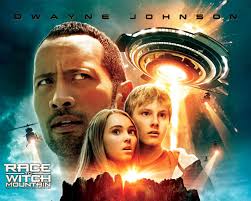
Race to witch mountain

Cast: Jack Bruno(Dwayne Johnson), Sara(AnnaSophia Robb), Seth(Alexander Ludwig),
Major Henry Burke(CiarΓ‘n Hinds) and professor alex(Carla Gugino)

Jack Bruno (Dwayne Johnson) is a cab driver in Las Vegas. One morning he is shocked to see two kids Seth and Sara seated at the back of his car. They seem to be in a hurry and tell him to drive to a specific location. They present a big amount of money to convince him, Jack is not interested in the money but the kids arouse his curiosity so he agrees.Watch a trailer here

They arrived at an old house in the middle of nowhere. The place and the house is unusual. Why would two kids want to go there? Jack’s curiosity and concern lead him to follow them.
The kids are looking for a device and encounter a few issues with an alien called “Siphon”. Siphon is here on planet earth purposely to target and destroys the kids Seth an Sara.

Jack, even though does not understand what’s really going on, is determined to offer his help and protection to the two. The lives of all three is now a race. On their way Seth and Sara tell Jack that they are aliens and they explain their mission on planet earth.

On the other side Major Henry Burke a government agent and his team are searching for two aliens and somewhere he knows that they are friends to Jack and he pursues and bullies him each time to snatch the kids from him.

In fact the two aliens planet is dying and the government of that planet wants to invade the earth to save their own planet and continue to live. The kids mission on earth is in fact to prevent this to happen. The device they now have in their possession is an experiment conducted by their parents to save their planet and having found it they have to take it quickly home.
The old house to which they went to search the device is in fact the location where the kids’ parents conducted this experiment. <a href="http://www.linkedtube.com/SX2PWpcJlrYe12f585ef5c60769d497d86a6723fa79.htm">LinkedTube</a>

There is one big issue to overcome though. It’s to find the spaceship of Seth and Sara. They don’t have any clue about it but the cab driver knows one of his client namely professor Alex Friedman a failed scientist who is delivering a speech at a conference on legitimate scientific theories of UFOs and outer space. They are now joined by the professor and Seth and Sara discover that their crashed spaceship has been relocated to a government based at Witch mountain. The group head to witch mountain, once there the kids are unfortunately captured and brought to the laboratory for experiment. In the meantime Siphon arrives to the base creates distraction and allows the humans Jack and professor Alex Friedman to free the kids.
The team together with the humans launch the spaceship and escape through the tunnel of witch mountain. Siphon is defeated and destroyed and Seth and Sara drop off Jack and professor Alex. All four share a tearful goodbye and Sara gives Jack the power to read minds. Honesty the movie is just OK but for those who like Sci-fi movie, it’s a good one. Well since I was a small girl I was and am still fascinated with science and outer space.

My own interpretation is that it seems that Hollywood is trying to make people understand that UFO and aliens do exist and that the US government knows something but they hide the truth from the world. At a given point in the movie Dr Friedman will tell major Henry Burke that the world should know what’s going on.

It is may be foolish on my part to say so but if aliens are controlling the world, then all the chaos in the world could be directly related to them. Is planet earth controlled by aliens? If they have a different name, are they devils because this reminds me of the biblical passage in the bible:
Ephesians 6:12: For our struggle is not against flesh and blood, but against the rulers, against the authorities, against the powers of this dark world and against the spiritual forces of evil in the heavenly realms;

Who are the spiritual forces in the heavenly realms. Alien? Devil? Have we ever thought about the connection between the two or are the same?

Animals United: “What Does Animals United Teach Kids About Stewarship, Nature, and God”

This post contains Amazon affiliate links. I may earn a commission at no extra cost to you. πŸ¦’ Animals United is a heart-warming animated m...